What happens when AI knows us better than we know ourselves? The first episode of The 2036 Question is out
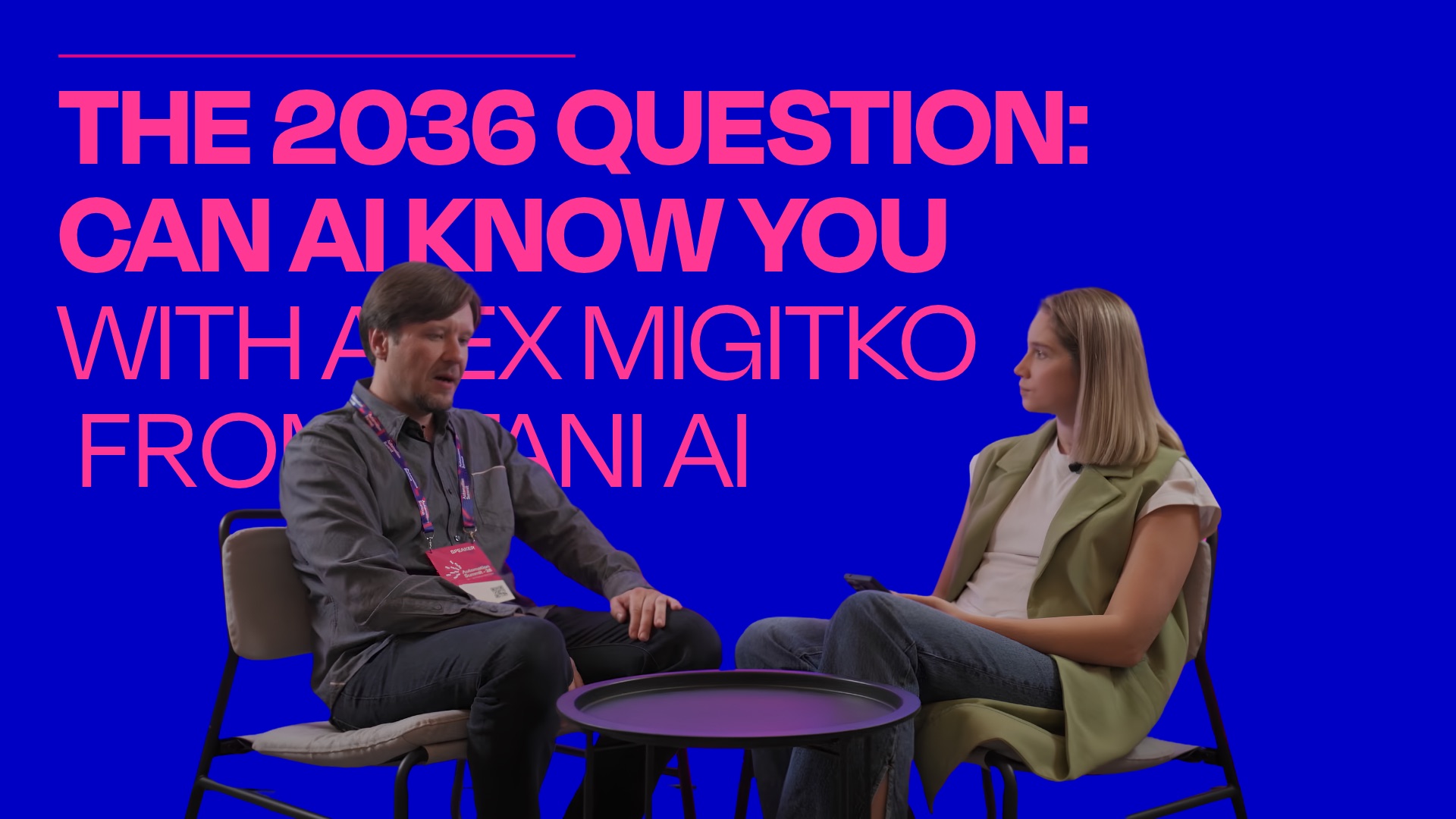
Can artificial intelligence recreate the way we think, predict what we want and explain why we make certain decisions? In the debut episode of Automation Summit’s new podcast series, The 2036 Question, Atani AI founder Aleksej Migitko explores what happens when human behavior becomes something we can simulate.
What if your next focus group didn't involve a single human being? No recruitment, no scheduling, no observation room. Just a group of AI-generated digital twins, each modeled on a real person's experiences, beliefs, preferences and biases, debating your product, campaign or business idea.
For Aleksej Migitko, founder of Belgrade-based startup Atani AI, this is already happening. His company is developing digital representations of consumers that allow businesses to investigate not only what people might choose, but also the motivations behind their decisions. And some of the results have challenged even his own assumptions about human behavior.
In the first episode of The 2036 Question, a new interview series recorded at Automation Summit 2026 in Split, Migitko joins host Dina Hrastović for a conversation that begins with market research and quickly moves into far less comfortable territory: the limits of human predictability, the commercial value of our personal experiences and the question of who should be allowed to create a digital version of us.
When digital people start behaving like real ones
Atani AI has already completed around 20 projects, building on research involving approximately 300 people. Its approach goes considerably further than asking consumers which brand they prefer. The company collects information about personal histories, relationships, values and opinions to create statistical representations of how individuals think and behave.
But what happens when those representations are placed in a virtual room together?
Migitko describes an experiment in which digital twins were allowed to respond to one another during simulated focus groups. Instead of producing the orderly, rational discussions one might expect from algorithms, the conversations sometimes became unexpectedly heated.
The experiment raises an intriguing question. If AI can reproduce our biases, contradictions and even our arguments, how much of human behavior does it actually need to understand?
And perhaps more importantly for businesses, does that distinction even matter?
The uncomfortable economics of knowing your customer
For decades, in-depth consumer research has been expensive, time-consuming and largely inaccessible to smaller businesses. AI promises to change that equation, making detailed qualitative insights available to companies that could never afford traditional research programs.
But the conversation takes a turn when Hrastović challenges what happens next.
If companies can consult increasingly sophisticated digital versions of their customers, will they eventually stop talking to actual people? And as AI models absorb more information about our lives, where does useful consumer research end and something resembling surveillance begin?
The two revisit the implications of Cambridge Analytica, the growing amount of personal information available online and an especially complicated question: if a digital version of you generates commercial value for years, who should receive the money?
Migitko's perspective, informed by building a business around synthetic consumer research, is more nuanced than a straightforward technological sales pitch. The discussion exposes both the possibilities and the uncomfortable limitations of attempting to turn human experience into usable data.
There is still something AI cannot capture. But for how long?
One of the episode's most interesting tensions concerns the difference between predicting a person and understanding one.
An AI model might correctly anticipate what someone will buy or how they will respond to a message. But can it reproduce the intuition of an experienced professional? Can it account for a childhood that was never documented online? Can it distinguish between what people publicly claim to believe and what they actually think?
And what happens when the same person gives contradictory answers to the same question?
These are not merely philosophical problems. They have direct implications for how much confidence executives should place in AI-generated research and, ultimately, how much decision-making they are prepared to delegate to machines.
The 2036 Question: What will we wish we had done differently?
Every episode of the series ends with the same thought experiment.
Imagine it is October 2036. Ten years have passed, and digital twins have become a routine part of business, consumer research and perhaps even our personal economic lives. Looking back at 2026, which decisions will we be grateful we made? And which consequences should we have anticipated?
Migitko's answer brings the conversation back to an issue that runs through the entire episode: our responsibility for technologies whose full implications we cannot yet understand.
The first episode of The 2036 Question is now available on the Automation Summit YouTube channel.
Watch the full conversation with Aleksej Migitko and discover what building digital versions of human beings can teach us about the originals.
The 2036 Question is an original Automation Summit podcast series bringing together entrepreneurs, technologists and business leaders to examine how today's decisions will shape the world of 2036. Recorded during Automation Summit 2026, held October 15–16 in Split, Croatia.